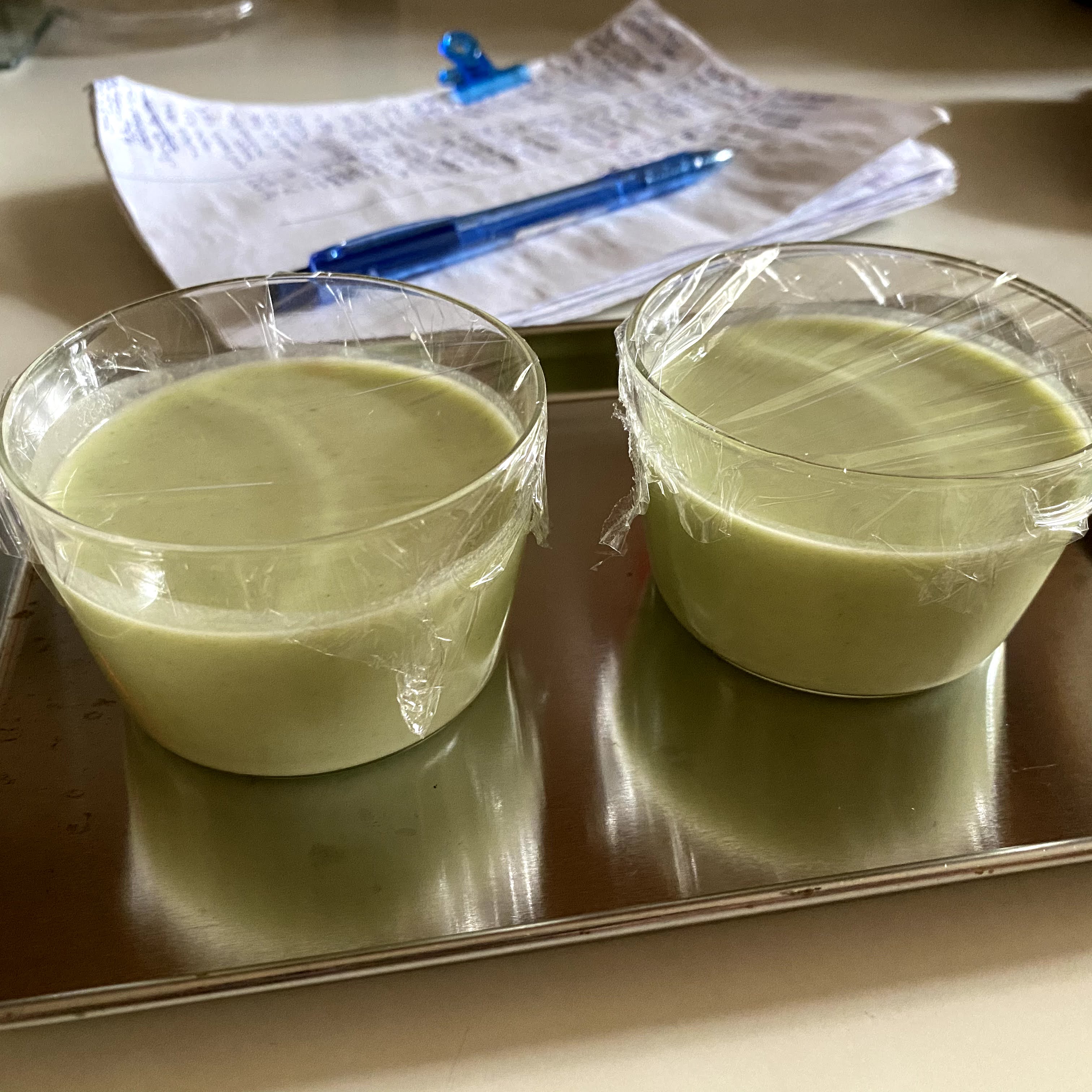
Friday, 18 December 2020

Pumpkin Milk Bread


I love this pumpkin milk bread with a moist, soft and slightly dense texture. The final brush of melted butter over the hot crust gave the bread a nice buttery aroma with a soft and slightly matte glossy shine. To me, by adding some mashed pumpkin paste to the dough, the bread seems to emulate brioche with less butter and egg πŸ˜‹πŸ˜‰


Raw dough weight: 631g
Pan size: 26Lx9Wx7H cm
Baking temperature: Preheat oven to 190℃, bake at low rack, at 180℃ for 15 minutes, 170℃ for 15 minutes, off oven for 5 minutes.


Ingredients
250g bread flour
30g superfine wholegrain flour
40g raw cane sugar
3g instant dry yeast
1/8 tsp vanillin powder, optional

50g natural yeast, 100% hydration*
65g steamed pumpkin, mashed
110g milk, cold
10g evaporated milk/milk
20g beaten egg
25g cold water, to be added depending on dough condition

3g fine salt

30g unsalted butter, softened

Some milk for brushing before baking
Some melted butter for brushing after baking

* natural yeast can be replaced by 25g each of bread flour and water.


Directions
1. Mix bread flour, superfine wholegrain flour, raw sugar, instant dry yeast and vanillin powder in a big mixing bowl.

2. Gradually add in natural yeast, pumpkin paste, milk, evaporated milk, and beaten egg. Stir in one direction till all the ingredients form into a big lump. Add the water gradually depending on the moisture level of the dough.

Cover the dough and let it rests for about 15 to 20 minutes to under autolysis.

3. Knead the dough using a hand mixer fitted with a pair of dough hooks for about 2 to 3 minutes, or till the dough becomes smoother.
Add the salt, and continue to knead of about 30 to 60 seconds.

Knead in the softened butter. Stop kneading when the butter is well incorporated to the dough.

Perform about 300 to 500 sets of "slapping and folding" till the dough reaches window pane stage.


Window pane: the dough can be stretched into a thin membrane

Shape the dough into a ball, spray some water over, cover with a lid, and let it  proof for about 60 minutes.

After 60 minutes of proofing.

4. Invert out the dough onto a floured worktop.
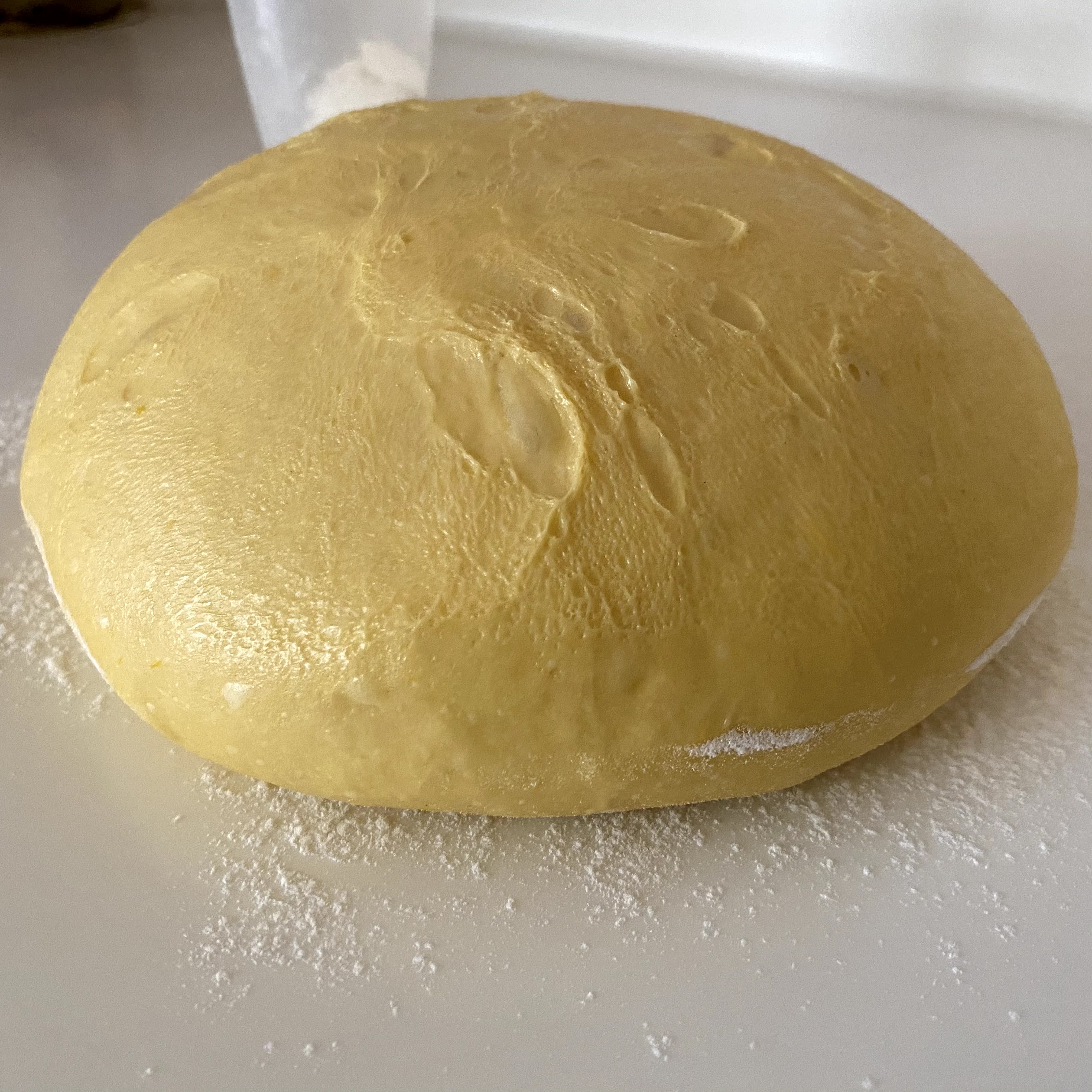
Deflate and divide into 4 portions.

Shape the cut dough into 4 balls,

cover and let them rest for about 15 minutes.

5. Roll out the dough into a flat dough of about 1cm thick.

Flip over and fold in the two wings towards the center.

Slightly roll flat and roll up into a log.


Place the shaped dough into the pan pre-coated with a thin film of butter. Spray some water over, cover with a tea-cloth, and let the dough undergo second proofing for about 45 minutes, or till the top reaching the rim of the pan.

End of second proofing.

6. Preheat the oven to 190℃ for about 10 minutes. While waiting, brush a coat of milk over the top of the dough.


Bake at lower rack at 180℃ for 15 minutes, lower to 170℃ for 15 minutes, turn off the oven and bake for 5 minutes.

Invert out the bread immediately after leaving the oven.

Brush a coat of melted butter over the hot crust. 

Let the bread cool down before cutting πŸ˜‹


Monday, 14 December 2020

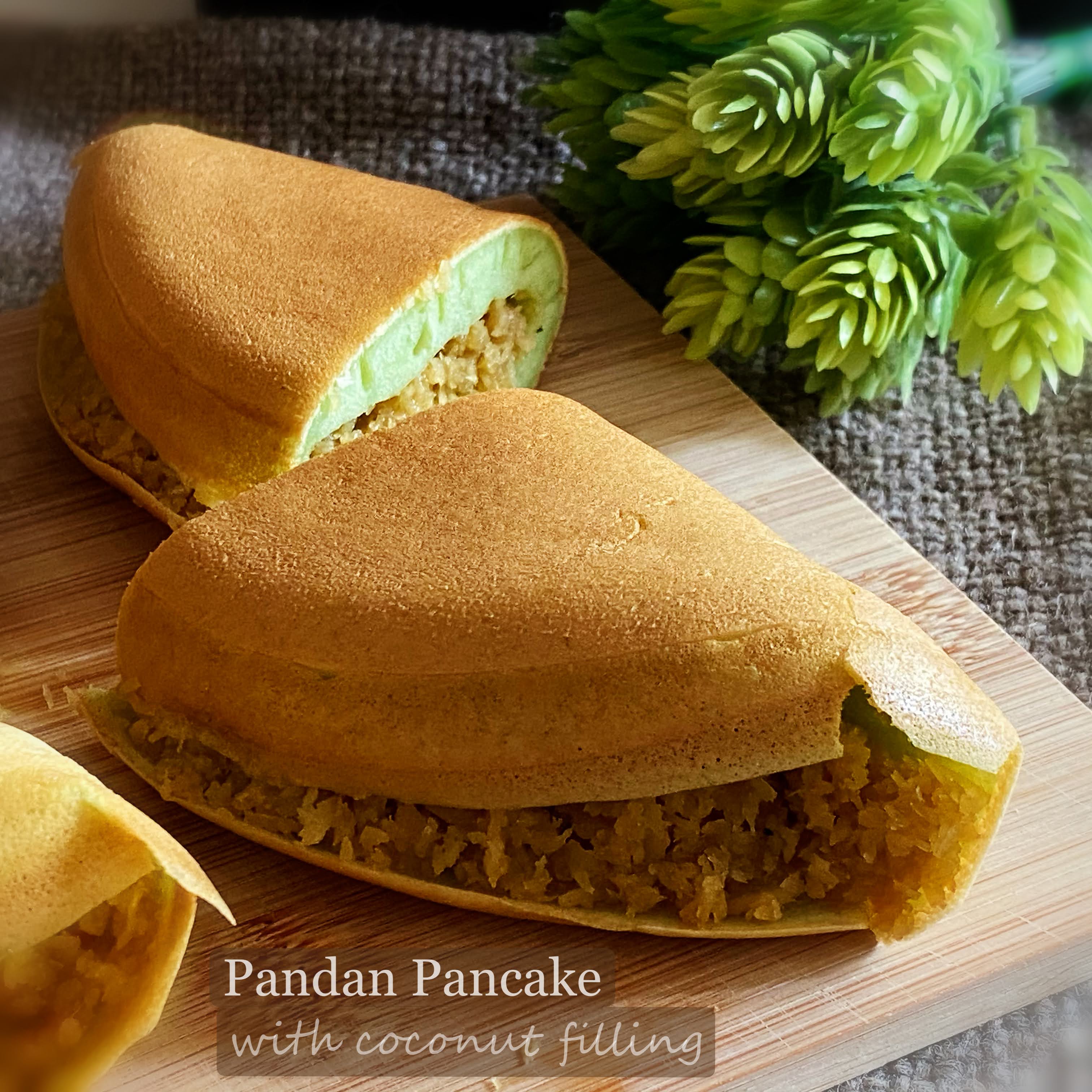
Pandan Pancake with Coconut Filling (16cm)


As a variation to my previous Personal Pan Peanut Pancake recipe, I tried a pandan flavour pancake with palm sugar grated coconut filling. I also tried a bigger quantity to cater to 4-person share. The pancake was still having a crispy edge and a soft, yet springy and moist crumb πŸ˜‹

Ingredients
42g plain flour
42g wheat starch澄青粉/plain flour

10g hot water
20g water
14g raw sugar

80g fresh milk, cold

12g beaten egg
6g rice bran oil/mild flavour/vegetable oil
15g fresh pandan leaves paste

1/8 tsp salt
1/8 tsp instant dry yeast
1/8 tsp baking powder

Filling


Directions

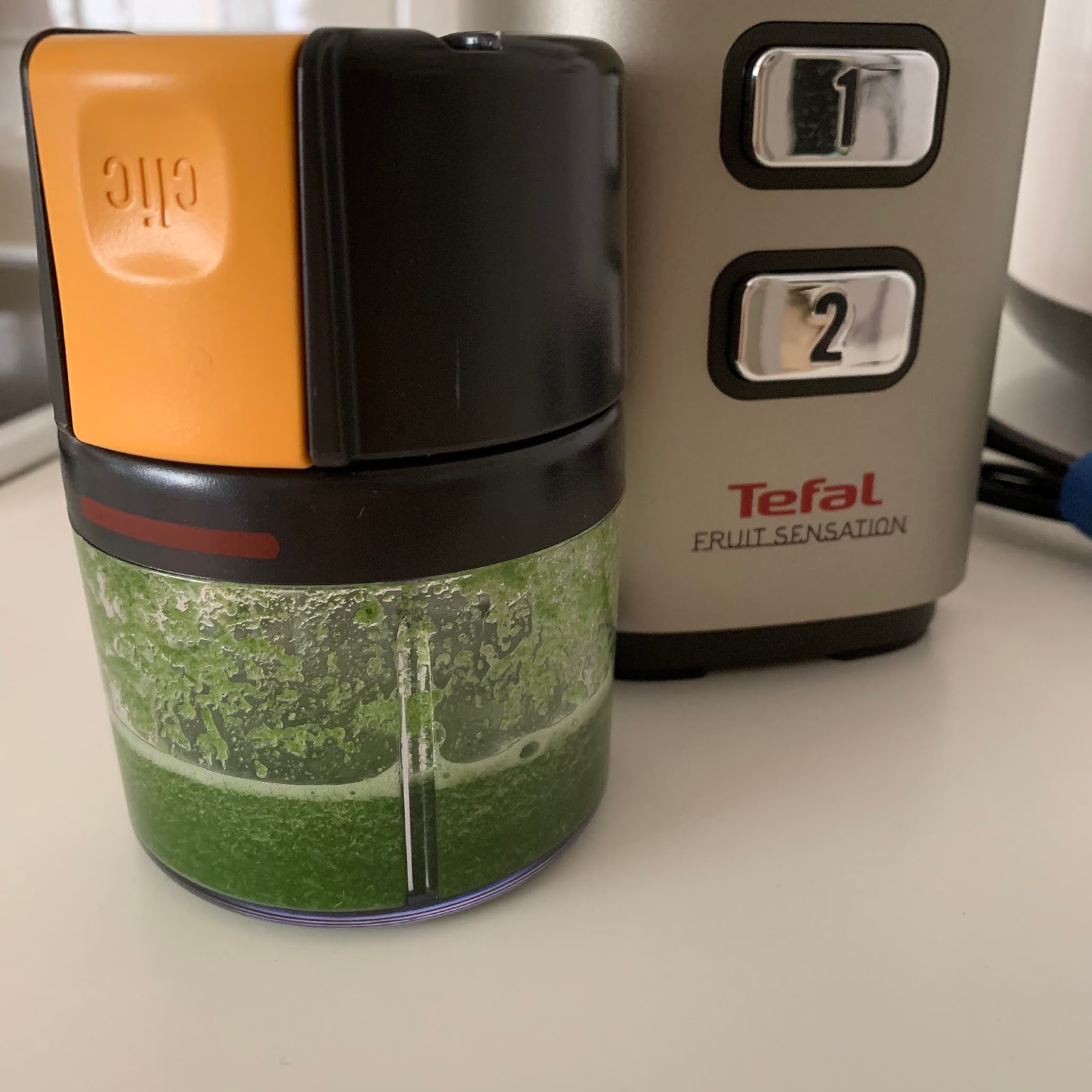
1. Cut 20g of pandan leaves into thin strips before blending with 50g of water into a smooth paste. Collect 15g of pandan paste for use. Keep the remaining in the chiller of the fridge.


2. Mix plain flour and wheat starch in a small mixing bowl.
Picture for illustration

3. Dissolve raw sugar in 10g hot water and 20g water.


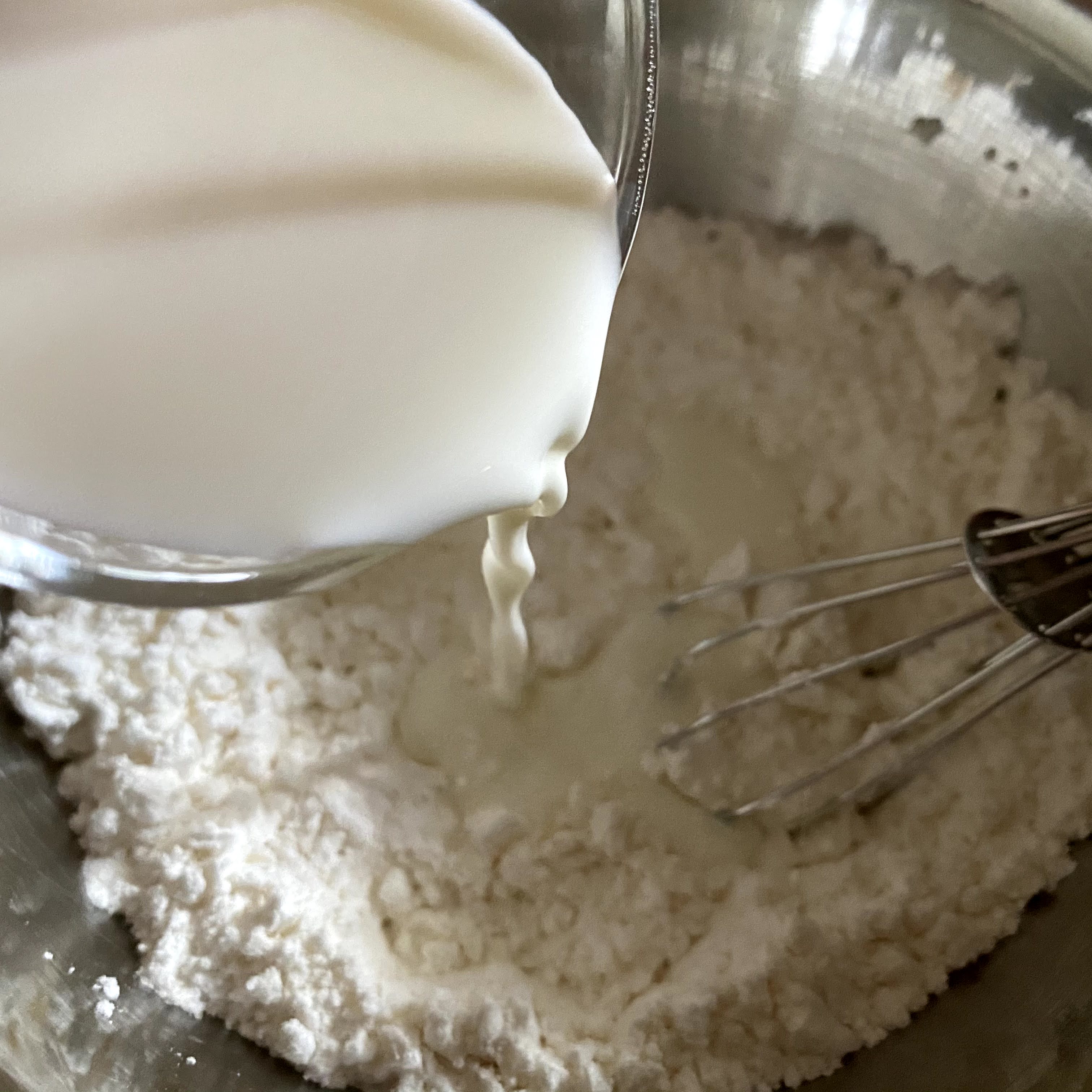
4. Mix flour mixture from Step 2 with cold fresh milk,


sugar syrup from Step 3,

beaten egg,

rice bran oil,

fresh pandan paste,

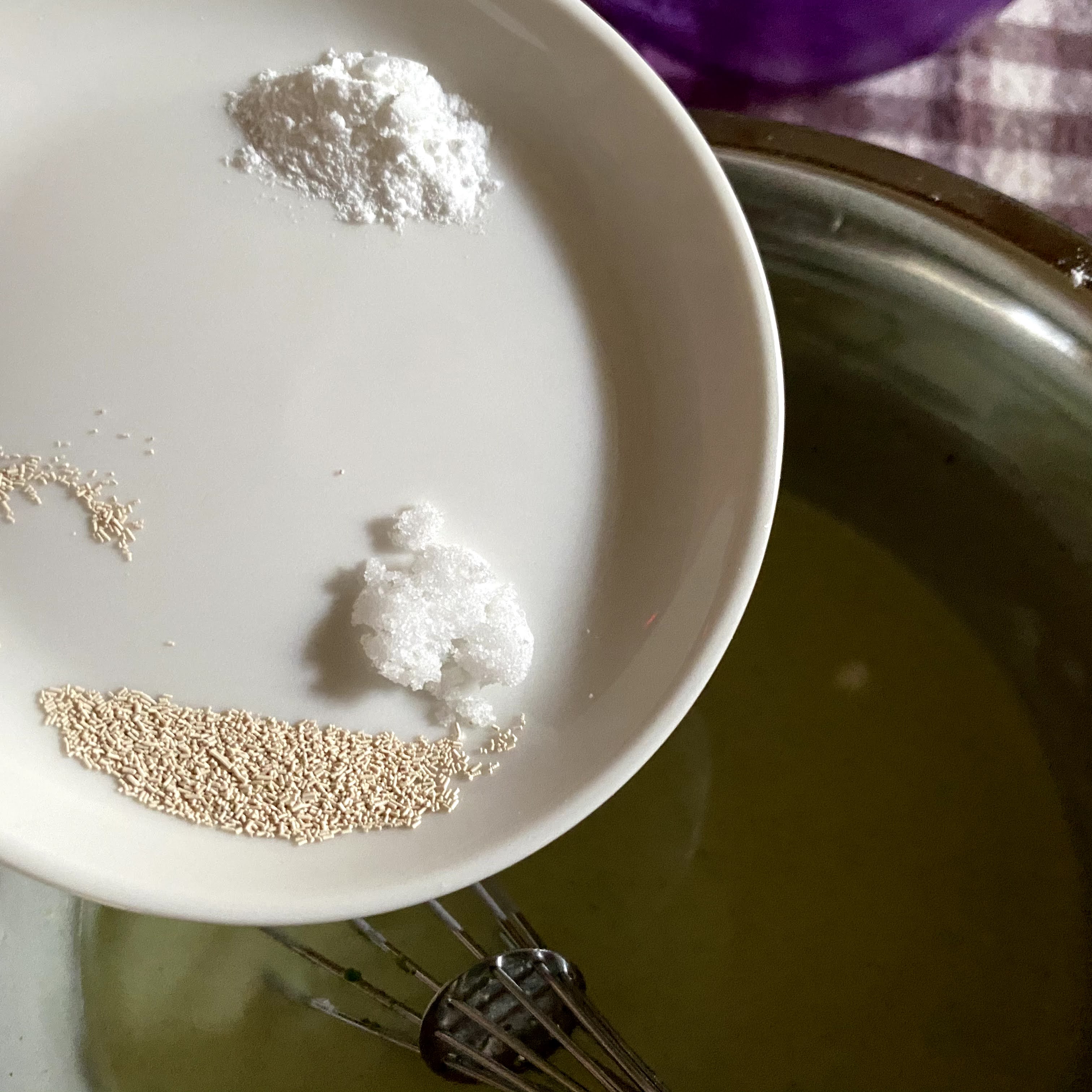
salt, instant dry yeast, and baking powder,

into a smooth batter.

4. Split the batter into two portions, about 118g each, for easy dispensing during cooking later. 

Seal with cling wrap each. Let the batter stand in room temperature for about 1 hour.

Keep in refrigeration, for 2 to 24 hours, or till needed. The batter also can be kept overnight for next day cooking.

Thaw the batter for about 1 hour before cooking.

5. Apply a thin coat of oil over a 16-cm non-stick frying pan.

Heat up at medium-low flame till the pan is evenly heat up.

Stir the batter before pouring into the pan.


6. Pour the batter into the hot pan.

After the bubbles rise to the top of the batter,

Give the pan about 2 rounds of swirling to form a thin skirting around the pancake.


Cover the pan and cook the batter at medium-low flame for about 1 minute,

before lowering to low flame.

Cook for about 5~6 minutes, or till the edge of the pancake starts to brown. If you prefer crispier edge, let the pancake cook longer.


6. Transfer the pancake to a cutting board and let the pancake cools for about 3 minutes.

Spread about 40 to 45g of palm sugar grated coconut filling to half the pancake.

Fold up the pancake into half.

Cut into halves, and enjoy the pancake warm πŸ˜‹