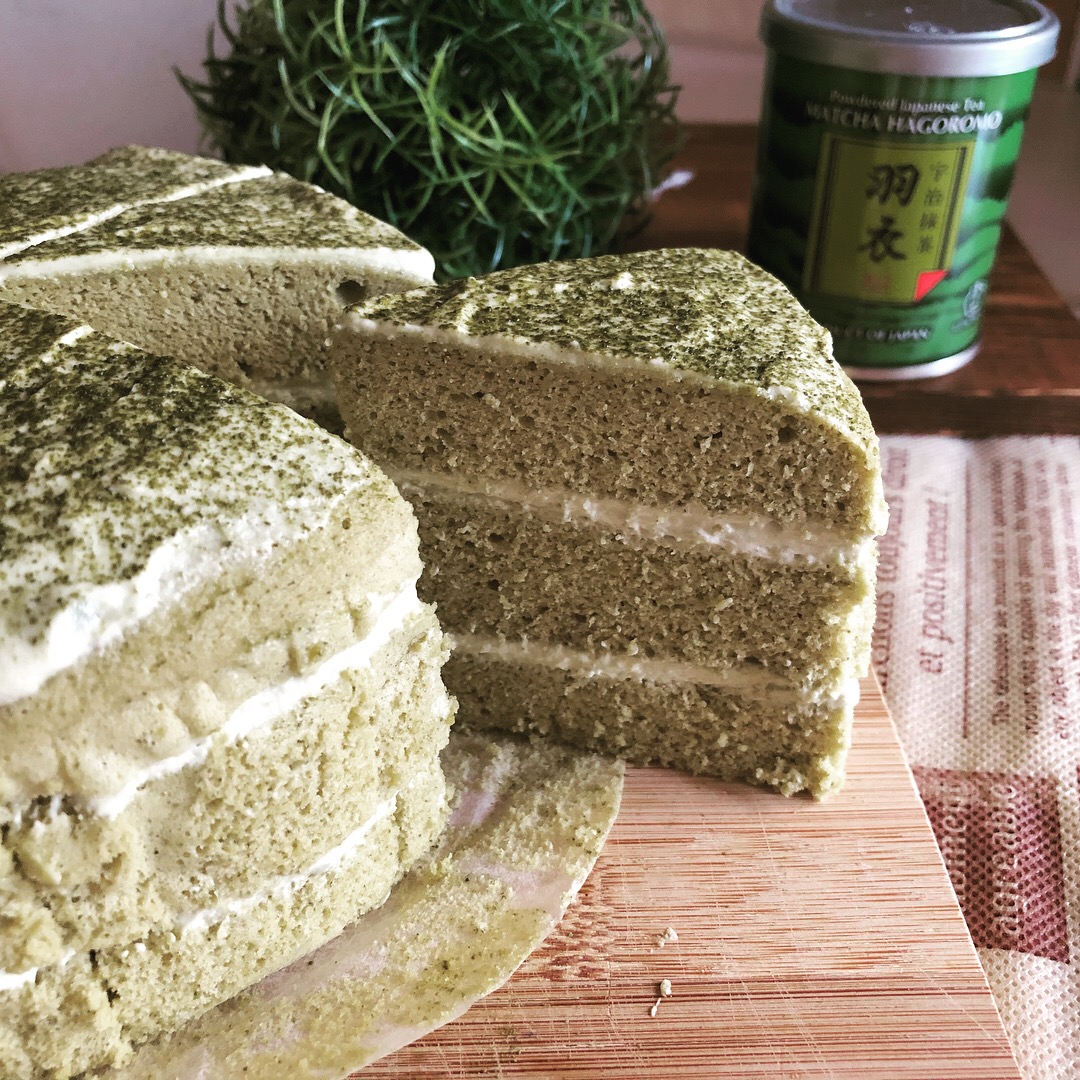
A light and soft green tea steamed cake sandwiched with same flavour ermine cream. Best enjoy it cold on a hot day 😋🍰🍵

A more "elaborate" version with sprinkled matcha and icing powder on top of the cream to give the cake a more pronounce green tea flavour 🍵

Yield: one 13cm round cake
Pan size: 14cm round cake pan
Matcha Ermine Cream
Ingredients6g top flour
1/4 tsp matcha/green tea powder
10g water
20g milk
5g condensed milk
60g whipping cream
10g icing sugar
Directions
1. Mix matcha powder and top flour in 10g of water in a heat resistant cup.


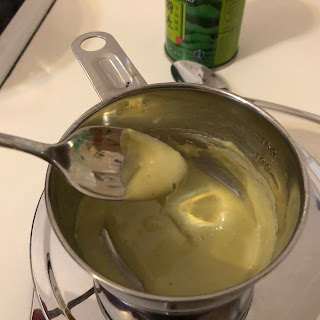
2. After the mixture has turned into smooth paste, stir in the milk and condensed milk.


3. Heat over low heat and stir constantly till the mixture turns into a smooth matcha roux/paste.

4. Loosely cover with a cling wrap and let the matcha roux cool down to room temperature before refrigeration.
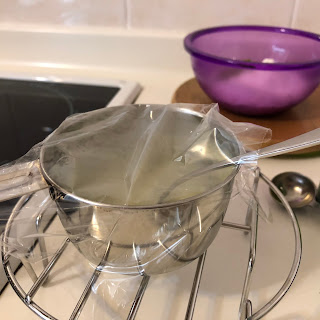

5. Refrigerate a tall mixing cup and whisk in the freezer for about 20 to 30 minutes before use.

6. Pour whipping cream into the cold mixing cup,

and whip the cream using the "Turbo" function of an handheld blender. Whip the cream for about 2 to 3 minutes till reaching the soft peak stage. Place an ice pad under the mixing cup to keep the content cold.

Pour in the icing sugar, and continue to whip using "Turbo" speed, till the cream becomes thick.

Reduce the speed to "2 to 3" on the speed dial, continue to whip till reaching firm peak stage.
Do not over whip, or the cream will turn into butter and whey.

7. Mix the whipped cream with the cold matcha roux.


Seal the prepared matcha ermine cream and keep in the "Fresh Freezing Compartment" if your fridge have one. It stores the cream at -3 to -1℃ without freezing it. Or else, just keep in normal refrigeration compartment.

All ingredients in room temperature
Directions
1. Mix matcha powder and top flour in 10g of water in a heat resistant cup.


2. After the mixture has turned into smooth paste, stir in the milk and condensed milk.


3. Heat over low heat and stir constantly till the mixture turns into a smooth matcha roux/paste.

4. Loosely cover with a cling wrap and let the matcha roux cool down to room temperature before refrigeration.


5. Refrigerate a tall mixing cup and whisk in the freezer for about 20 to 30 minutes before use.

6. Pour whipping cream into the cold mixing cup,

and whip the cream using the "Turbo" function of an handheld blender. Whip the cream for about 2 to 3 minutes till reaching the soft peak stage. Place an ice pad under the mixing cup to keep the content cold.

Pour in the icing sugar, and continue to whip using "Turbo" speed, till the cream becomes thick.

Reduce the speed to "2 to 3" on the speed dial, continue to whip till reaching firm peak stage.
Do not over whip, or the cream will turn into butter and whey.

7. Mix the whipped cream with the cold matcha roux.


Seal the prepared matcha ermine cream and keep in the "Fresh Freezing Compartment" if your fridge have one. It stores the cream at -3 to -1℃ without freezing it. Or else, just keep in normal refrigeration compartment.

Matcha Cake
IngredientsAll ingredients in room temperature
Using 55g Omega 3&6 eggs
50g milk
10g condensed milk
10g rice bran oil
70g top/cake flour
4g matcha/green tea powder
2 egg whites
Pinch of salt
50g fine sugar
2 egg yplks
Directions
1. Line a 14cm round cake pan with parchment paper. Set aside.

2. Mix matcha/green tea powder with top flour. Set aside.


3. Mix milk, condensed milk, and rice bran oil in a cup. Set aside.

4. In a clean, dry and oil-free mixing bowl, beat egg whites to frothy before adding pinch of salt and 1/3 of the sugar.


Continue to beat and add in the remaining two batches of sugar gradually, till reaching almost firm peak stage.

5. Add in the egg yolks, one at a time, to the meringue.

Continue to beat till reaching "ribbon stage".

6. Fold in the matcha-flour and milk-oil mixture from Step 2 & 3 following the sequence of
1/3 Flour ⏩ 1/2 milk-oil ⏩ 1/3 flour ⏩ 1/2 milk-oil ⏩ 1/3 flour
Sieve in 1/3 of the matcha-flour mixture from Step 2. Mix briefly.

Add in 1/2 of the oil-milk mixture from Step 3.

Use a spatula to give a more thorough mixing to ensure no flour or liquid settle at the bottom.
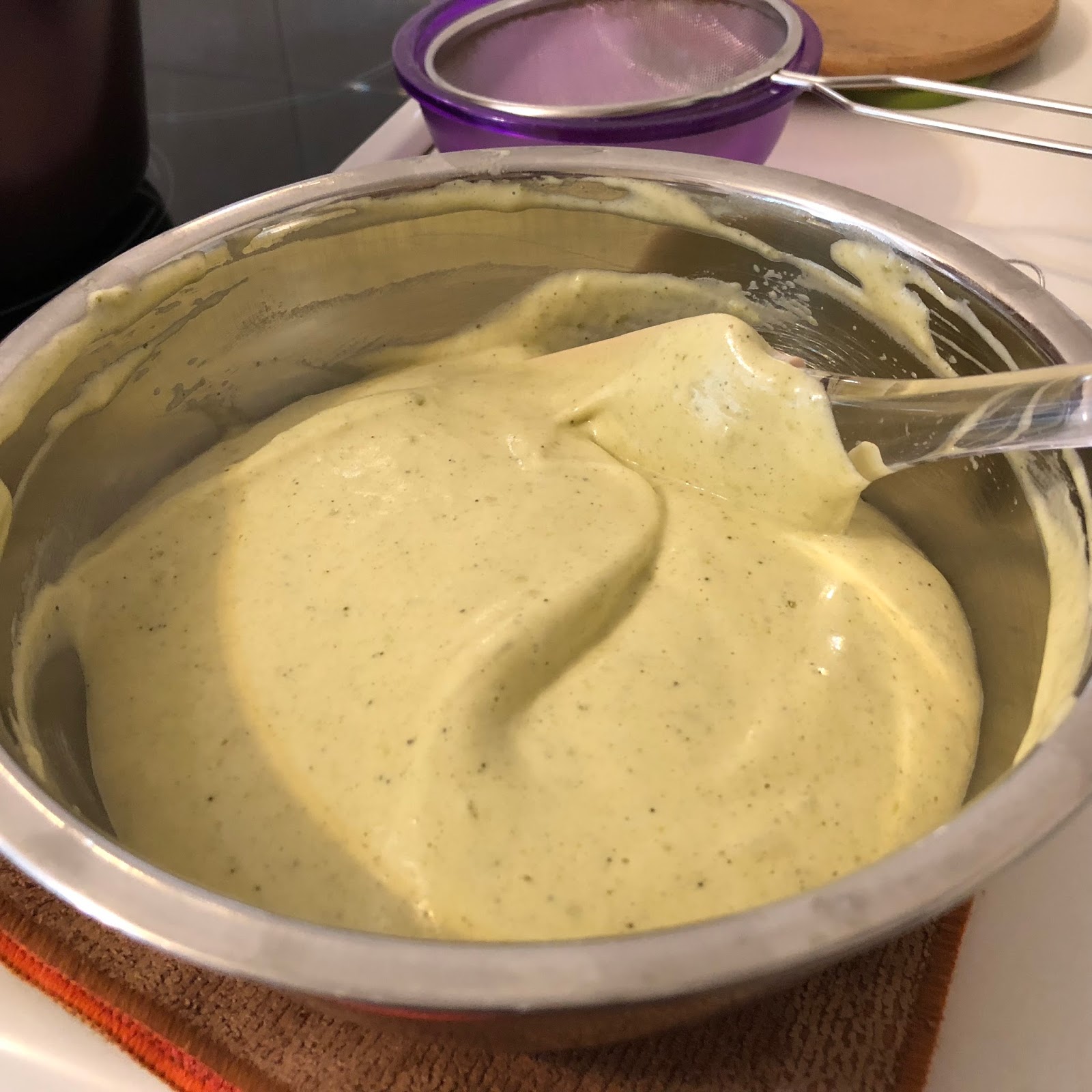
7. Pour the cake batter into the prepared cake pan

Bang lightly against the work top to even out the batter and the get rid of trapped air bubbles.

8. Pour about 100ml of water into an 18cm pot. Place a steamer's stand in it. Bring to a light boil using medium-low heat. Starts to heat up the pot of water when you begin to prepare the cake, so there would not be any delay in steaming the cake.

Lower the cake batter into the pot when the water starts to boil. Wipe dry the lid before covering, and steam at medium low heat for about 5 minutes, The lid of the steamer has a small steam vent.

Reduce the heat to low and continue to steam for about 13 minutes.

After the 13th minute, turn off the heat, without opening the lid, let the cake stays in the pot for another 2 minutes.

Finally, lift up the lid carefully to avoid the condensed water from dripping onto the cake. Test the cake with a tester.

9. Lift up the cake from the pot, drop the cake from a height of about 10 cm onto a kitchen towel thrice, to prevent the cake from over-shrinking.
Keep the cake in the pan for about 3 minutes before lifting the cake out to cool over a rack.


10. When the cake has cooled to room temperature, keep it in the refrigerator for about 1 hour. This step is optional. As Singapore weather is usually hot, I prefer to deal with a cool cake during icing.

11. Trim the parchment paper and slice the cake into 3 layers.


Apply cold matcha ermine cream in between, and/or on top of the cake.


Let the cake refrigerate for about 4 to 5 hours before cutting would be better.


I applied the matcha ermine cream on top of the cake, and sprinkled with matcha/green tea powder together with icing sugar. The icing sugar was to reduce the bitterness of the matcha.